


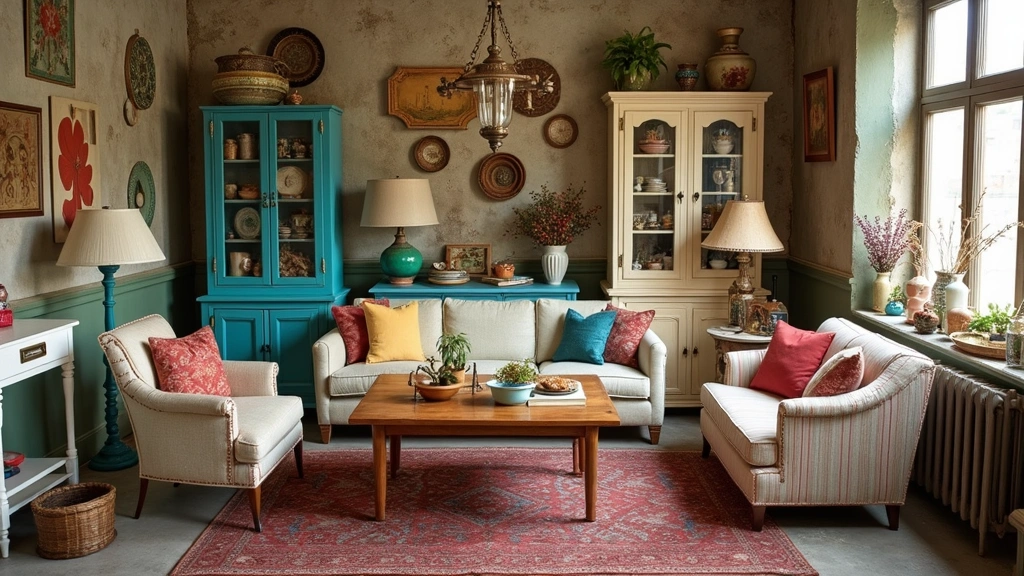
3. Repeat Materials, Not Eras
You don’t need everything to be from the same decade. Instead, repeat materials—walnut, brass, linen, cane—across old and new pieces. That creates cohesion without forcing a theme.
4. Don’t Be Afraid to Modify
Adaptive reuse isn’t about museum-level preservation. It’s about making things work for your life. So yes, cut the legs off that table. Paint that dresser. Swap out the hardware. Add a glass top to protect the wood. The piece should serve you—not the other way around.
Real-World Examples That Actually Inspire
Let’s get specific. Here are a few adaptive reuse ideas that have worked beautifully in real homes.
| Vintage Item | Modern Reuse | Why It Works |
|---|---|---|
| Old wooden ladder | Blanket or towel rack | Rustic texture against clean walls |
| Vintage trunk | Coffee table with storage | Adds character and function |
| Retro radio cabinet | Pet bed or bar cart | Unexpected, playful, conversation starter |
| Antique door | Headboard or sliding barn door | Large scale, rich patina |
| Mid-century desk | Vanity or entryway console | Slim profile, warm wood tones |
See the pattern? It’s not about hiding the past. It’s about letting it shine in a new context.
The Sustainability Story (Because It Matters)
Let’s not gloss over this. Fast furniture is a problem. Cheap particleboard pieces get tossed every few years. They’re not built to last. Vintage furniture, on the other hand, was often made with solid wood, dovetail joints, and real craftsmanship.
When you choose adaptive reuse, you’re saying no to that disposable cycle. You’re extending a product’s life, reducing carbon emissions, and often saving money too. A well-restored vintage piece can cost less than a mid-range new one—and it’ll last decades longer.
Plus, there’s the emotional factor. A piece with a history feels different. It carries weight. Not just physical weight, but narrative weight. And that’s something no flat-pack box can replicate.
Common Pitfalls (and How to Dodge Them)
Sure, adaptive reuse sounds dreamy. But it’s not always smooth sailing. Here are a few traps to watch for.
- Ignoring structural issues. That gorgeous chair might have woodworm or a cracked frame. Inspect before you buy.
- Over-restoring. Sometimes the patina is the point. Don’t sand away all the character.
- Forcing a fit. If a piece doesn’t work in your space, let it go. Not every vintage find needs to come home with you.
- Mismatched proportions. A tiny vintage stool next to a massive sectional will look lost. Measure, measure, measure.
And hey, it’s okay to make mistakes. I once painted a mid-century sideboard bright orange. It was… a lot. But I learned. You will too.
Where to Find Vintage Furniture Worth Reusing
You don’t need a fancy dealer. Some of the best pieces come from unexpected places.
- Estate sales (goldmines, honestly)
- Facebook Marketplace and Craigslist
- Local thrift stores and charity shops
- Architectural salvage yards
- Auctions (especially online ones)
- Curbside on bulk trash day (yes, really)
Keep an open mind. That ugly duckling dresser might just need new knobs and a little love.
Final Thoughts: Let the Past Live in the Present
Adaptive reuse of vintage furniture isn’t about nostalgia for nostalgia’s sake. It’s about recognizing that good design endures. It’s about layering stories, textures, and time. And it’s about creating a home that feels—well, like yours. Not like a showroom. Not like a catalog. Like a place where old and new coexist, a little imperfectly, a little beautifully.
So the next time you see a worn wooden chair on the sidewalk or a dusty trunk at a flea market, don’t walk past. Pause. Imagine. That piece might just be the soul your modern room has been missing.
There’s something almost magical about a room where a 1950s walnut credenza sits beneath a minimalist abstract painting, or where a Victorian armchair—upholstered in something bold and unexpected—anchors a sleek, glass-walled living space. That tension, that little whisper of “wait, does this work?” is exactly why adaptive reuse of vintage furniture has become one of the most compelling design stories of the past few years.
And honestly? It’s not just a trend. It’s a mindset shift. Call it slow design, call it heritage hacking, call it whatever you like—repurposing old furniture for modern homes is equal parts sustainability, nostalgia, and creative flex.
What Exactly Is Adaptive Reuse (and Why Should You Care)?
In architecture, adaptive reuse means giving an old building a new purpose—like turning a factory into loft apartments. When we apply that idea to furniture, it’s pretty much the same logic. You take a piece that was built for one era, one function, one aesthetic, and you reimagine it for today.
Maybe that means:
- Converting a vintage suitcase into a side table (yes, really)
- Reupholstering a mid-century sofa in performance velvet
- Turning an old dresser into a bathroom vanity
- Using a retro typewriter case as a wall shelf
The point isn’t to preserve things exactly as they were. It’s to let them evolve. And that, well, that’s a beautiful thing.
Why Vintage Furniture Works So Well in Modern Interiors
Modern interiors can sometimes feel a little… cold. All those clean lines, neutral palettes, and open spaces are gorgeous, sure. But without contrast, they can lack soul. Vintage furniture brings warmth, texture, and a story.
Here’s the deal: mixing old and new creates visual tension. And tension—when done right—is interesting. A sleek, white kitchen with a weathered farmhouse table? Gorgeous. A glass-and-steel loft with a tufted 1970s lounge chair? Chef’s kiss.
Plus, there’s the sustainability angle. According to some estimates, the furniture industry generates over 12 million tons of waste annually in the U.S. alone. Adaptive reuse keeps pieces out of landfills and reduces demand for new materials. That’s not just trendy—it’s necessary.
How to Blend Vintage Pieces Without Looking Like a Thrift Store Explosion
Okay, so you love the idea. But how do you actually do it without your living room looking like a chaotic flea market? Here are some practical, real-world tips.
1. Start with One Hero Piece
Don’t overhaul everything at once. Pick a single vintage item that speaks to you—a brass floor lamp, a teak dining table, a carved wooden mirror. Let it be the anchor. Then build your modern elements around it.
2. Balance Weight and Scale
Vintage furniture often has more visual weight than modern pieces. A chunky armoire next to a slim-line sofa can feel lopsided. So, think about proportion. Pair heavy with light. Ornate with simple. Dark with airy.
3. Repeat Materials, Not Eras
You don’t need everything to be from the same decade. Instead, repeat materials—walnut, brass, linen, cane—across old and new pieces. That creates cohesion without forcing a theme.
4. Don’t Be Afraid to Modify
Adaptive reuse isn’t about museum-level preservation. It’s about making things work for your life. So yes, cut the legs off that table. Paint that dresser. Swap out the hardware. Add a glass top to protect the wood. The piece should serve you—not the other way around.
Real-World Examples That Actually Inspire
Let’s get specific. Here are a few adaptive reuse ideas that have worked beautifully in real homes.
| Vintage Item | Modern Reuse | Why It Works |
|---|---|---|
| Old wooden ladder | Blanket or towel rack | Rustic texture against clean walls |
| Vintage trunk | Coffee table with storage | Adds character and function |
| Retro radio cabinet | Pet bed or bar cart | Unexpected, playful, conversation starter |
| Antique door | Headboard or sliding barn door | Large scale, rich patina |
| Mid-century desk | Vanity or entryway console | Slim profile, warm wood tones |
See the pattern? It’s not about hiding the past. It’s about letting it shine in a new context.
The Sustainability Story (Because It Matters)
Let’s not gloss over this. Fast furniture is a problem. Cheap particleboard pieces get tossed every few years. They’re not built to last. Vintage furniture, on the other hand, was often made with solid wood, dovetail joints, and real craftsmanship.
When you choose adaptive reuse, you’re saying no to that disposable cycle. You’re extending a product’s life, reducing carbon emissions, and often saving money too. A well-restored vintage piece can cost less than a mid-range new one—and it’ll last decades longer.
Plus, there’s the emotional factor. A piece with a history feels different. It carries weight. Not just physical weight, but narrative weight. And that’s something no flat-pack box can replicate.
Common Pitfalls (and How to Dodge Them)
Sure, adaptive reuse sounds dreamy. But it’s not always smooth sailing. Here are a few traps to watch for.
- Ignoring structural issues. That gorgeous chair might have woodworm or a cracked frame. Inspect before you buy.
- Over-restoring. Sometimes the patina is the point. Don’t sand away all the character.
- Forcing a fit. If a piece doesn’t work in your space, let it go. Not every vintage find needs to come home with you.
- Mismatched proportions. A tiny vintage stool next to a massive sectional will look lost. Measure, measure, measure.
And hey, it’s okay to make mistakes. I once painted a mid-century sideboard bright orange. It was… a lot. But I learned. You will too.
Where to Find Vintage Furniture Worth Reusing
You don’t need a fancy dealer. Some of the best pieces come from unexpected places.
- Estate sales (goldmines, honestly)
- Facebook Marketplace and Craigslist
- Local thrift stores and charity shops
- Architectural salvage yards
- Auctions (especially online ones)
- Curbside on bulk trash day (yes, really)
Keep an open mind. That ugly duckling dresser might just need new knobs and a little love.
Final Thoughts: Let the Past Live in the Present
Adaptive reuse of vintage furniture isn’t about nostalgia for nostalgia’s sake. It’s about recognizing that good design endures. It’s about layering stories, textures, and time. And it’s about creating a home that feels—well, like yours. Not like a showroom. Not like a catalog. Like a place where old and new coexist, a little imperfectly, a little beautifully.
So the next time you see a worn wooden chair on the sidewalk or a dusty trunk at a flea market, don’t walk past. Pause. Imagine. That piece might just be the soul your modern room has been missing.